

Physiotherapy for Foot and Ankle Pain
Foot and Ankle Injury Treatment
Your feet and ankles support your entire body weight with every step. When pain, instability, or stiffness develops, it can affect your ability to walk, train, work, and enjoy daily life. At SportsHealth Physio, our physiotherapists assess and treat a wide range of foot and ankle conditions at our Richmond and South Yarra clinics.
Whether you have rolled your ankle playing sport, developed heel pain from running, or are dealing with a gradual onset of foot pain, we offer same day appointments so you can get an accurate assessment and start treatment without delay.
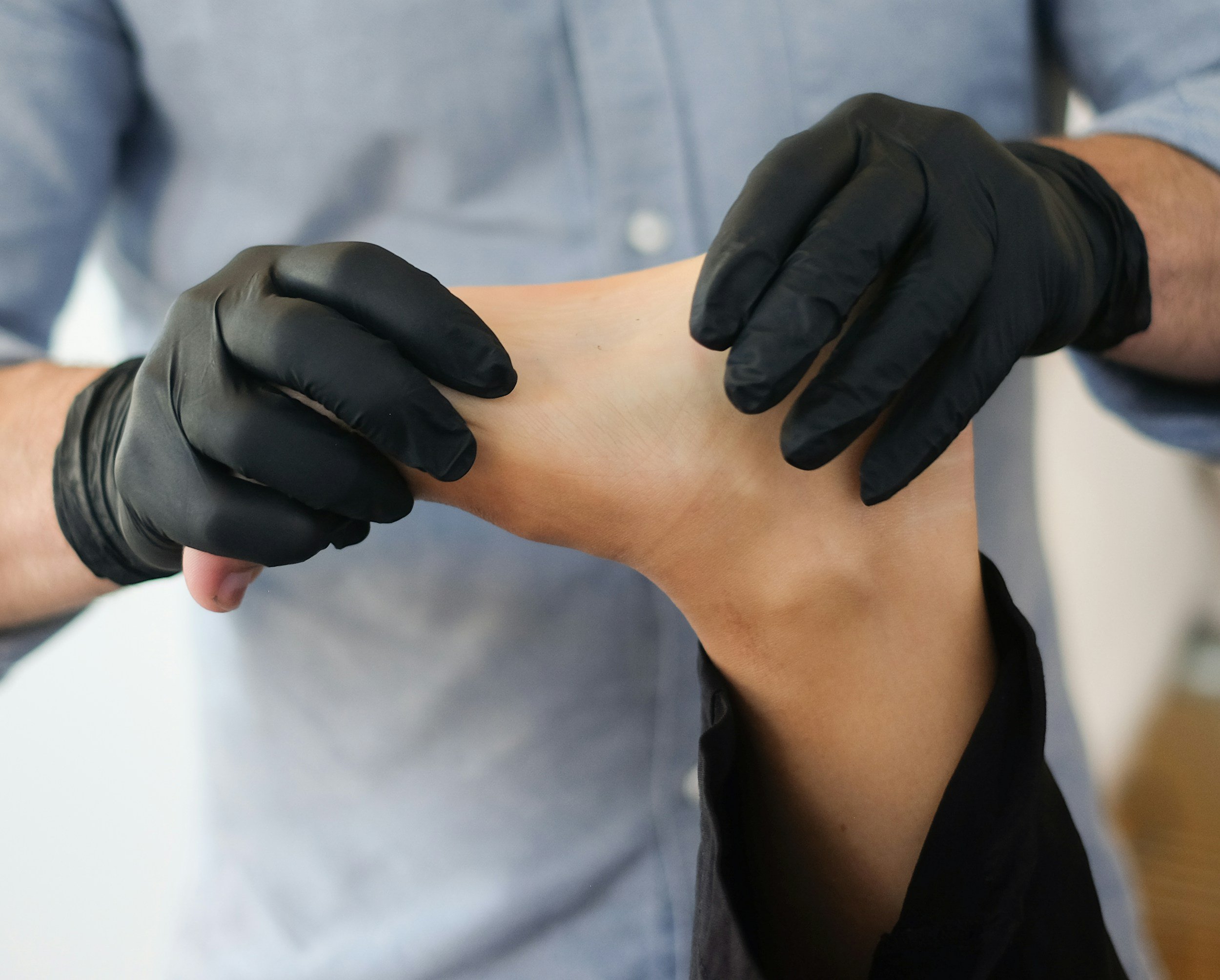
Common Foot and Ankle Conditions We Treat
The foot and ankle contain 26 bones, over 30 joints, and more than 100 muscles, tendons, and ligaments. With this complexity, there are many potential sources of pain and dysfunction. Our physiotherapists commonly assess and treat the following conditions:
Ankle Sprains
An ankle sprain occurs when the ligaments supporting the ankle are stretched or torn, most commonly on the outside of the ankle (lateral sprain). Symptoms include pain, swelling, bruising, and difficulty bearing weight. Ankle sprains are one of the most common injuries in sport, particularly in AFL, netball, basketball, soccer, and running. Proper rehabilitation is important for restoring stability and reducing the risk of re-injury.
Plantar Fasciitis
Plantar fasciitis involves irritation or degeneration of the plantar fascia, a thick band of tissue running along the sole of the foot. It typically causes sharp heel pain that is worse with the first steps in the morning or after prolonged sitting. It is common in runners, people who stand for long periods, and those who have recently increased their activity levels.
Achilles Tendonitis and Tendinopathy
The Achilles tendon connects the calf muscles to the heel bone and is the largest tendon in the body. Overuse, sudden increases in training load, or biomechanical factors can lead to pain, stiffness, and swelling in the tendon. Achilles tendinopathy is common in runners, court sport players, and active adults. Evidence-based loading programs are a cornerstone of treatment.
Ankle Instability
Chronic ankle instability develops when an ankle sprain does not fully rehabilitate, leaving the ankle feeling loose or unstable. People with this condition may experience repeated rolling or giving way of the ankle, particularly on uneven surfaces or during sport. A targeted strengthening and balance program can help restore confidence and stability.
Stress Fractures
Stress fractures are small cracks in the bone caused by repetitive loading, most commonly affecting the metatarsals (forefoot bones), navicular, or tibia. They typically present as a localised ache that worsens with activity and eases with rest. Stress fractures are common in runners and athletes who have rapidly increased their training volume. Your physiotherapist can help identify when imaging and medical review are needed.
Metatarsalgia and Forefoot Pain
Metatarsalgia refers to pain in the ball of the foot, often caused by overloading of the metatarsal heads. It can result from increased activity, poorly fitting footwear, altered foot mechanics, or conditions affecting the forefoot joints. Physiotherapy can help address contributing factors and reduce symptoms.
Heel Pain
While plantar fasciitis is the most common cause of heel pain, other conditions such as fat pad irritation, calcaneal stress fractures, and Sever's disease (in adolescents) can also cause symptoms. A thorough assessment helps differentiate between these causes and guide appropriate treatment.
Shin Splints (Medial Tibial Stress Syndrome)
Shin splints cause pain along the inside of the shin bone and are closely related to foot and ankle biomechanics. They are common in runners and athletes involved in sports with repetitive impact, such as netball and basketball. Treatment addresses load management, running technique, calf and foot strengthening, and contributing biomechanical factors.
Toe and Midfoot Injuries
Injuries to the toes and midfoot, including turf toe, sesamoiditis, and Lisfranc injuries, can significantly affect mobility and function. These are common in athletes and people who place high demands on their feet. Physiotherapy helps restore range of motion, strength, and the ability to push off during walking and running.
How Physiotherapy May Help
Physiotherapy can play an important role in the management of foot and ankle injuries, whether your condition is acute, chronic, or post-surgical. Our physiotherapists use a combination of approaches tailored to your specific presentation:
Assessment and Diagnosis
A thorough clinical assessment examines joint mobility, ligament stability, muscle strength, gait and movement patterns, and footwear. Your physiotherapist uses specific tests to build a clear picture of your condition and identify contributing factors.
Exercise Rehabilitation
Targeted exercises form the foundation of treatment for most foot and ankle conditions. Your program may include progressive loading for tendinopathy, balance and proprioception training for ankle instability, calf and intrinsic foot strengthening, and sport-specific agility work for return to activity.
Hands-On Treatment
Joint mobilisation and soft tissue techniques can help reduce stiffness, improve ankle range of motion, and ease pain. These techniques are particularly useful following ankle sprains, periods of immobilisation, or when joint restriction is contributing to symptoms.
Dry Needling
Dry needling may help address muscle tension and trigger points in the calf, shin, and foot that contribute to pain and restricted movement. When appropriate, it is used alongside hands-on therapy and exercise rehabilitation to support recovery. Most of our clinicians are certified in dry needling.
Gait Analysis and Footwear Advice
How you walk and run, and the shoes you wear, can significantly influence foot and ankle symptoms. We provide practical advice on footwear selection and can assess your walking or running gait to identify patterns that may be contributing to your pain.
Shockwave Therapy
Extracorporeal shockwave therapy may be used as part of a broader treatment plan for chronic conditions such as plantar fasciitis and Achilles tendinopathy. It works by stimulating tissue healing and can be effective when combined with an appropriate exercise program.
What to Expect at Your Appointment
Your first appointment includes a comprehensive assessment of your foot and ankle symptoms:
Detailed history: we discuss how your injury occurred or how your symptoms developed, what aggravates or eases them, your activity and training demands, and any relevant medical history.
Physical assessment: your physiotherapist examines joint range of motion, ligament stability, muscle strength, balance, gait, and specific diagnostic tests relevant to your presentation.
Treatment: based on the findings, treatment begins in the same session. This may include hands-on therapy, dry needling, taping, or guided exercises.
Home program: you receive a personalised exercise and management plan, including any footwear recommendations or activity modifications.
Same day appointments are available at both clinics. If your foot or ankle pain is affecting your mobility or activities, we aim to see you today.
Who We Help
Foot and ankle injuries affect people across all activity levels. At SportsHealth Physio, we regularly treat:
Runners with plantar fasciitis, Achilles tendinopathy, shin splints, or stress fractures
Team sport athletes with ankle sprains, chronic instability, or turf toe from AFL, netball, basketball, and soccer
Gym-goers with ankle or foot pain affecting squats, lunges, or plyometric training
Workers on their feet experiencing heel pain, metatarsalgia, or general foot fatigue from prolonged standing
Older adults with ankle stiffness, balance concerns, or osteoarthritis in the foot and ankle
Post-surgical patients recovering from ankle reconstruction, Achilles repair, or fracture fixation who need guided rehabilitation
We accept private health insurance, WorkCover, TAC, NDIS, and Medicare (with a valid GP referral). Our clinics are open seven days a week.

Convenient Clinic Locations
620 Victoria Street, Richmond VIC 3121
Located in Victoria Gardens Shopping Centre, our Richmond clinic services patients from Abbotsford, Hawthorn, Burnley, Collingwood, and East Melbourne.
38-40 Garden Street, South Yarra VIC 3141
Located opposite The Jam Factory, our South Yarra clinic is convenient for patients from Toorak, Prahran, Cremorne, and St Kilda.
Both clinics offer same day appointments and modern treatment facilities.
Frequently Asked Questions
Still have questions? Take a look at the FAQ or reach out anytime. If you’re feeling ready, go ahead and apply.
-
Recovery time depends on the severity of the sprain. A mild (grade 1) ankle sprain may take 1 to 3 weeks, while a moderate (grade 2) sprain typically takes 4 to 6 weeks. Severe (grade 3) sprains involving a complete ligament tear can take 3 months or longer. Proper rehabilitation is important at every stage to restore strength and stability and reduce the risk of re-injury.
-
Morning heel pain is most commonly associated with plantar fasciitis. The plantar fascia tightens overnight, and the first steps of the day place a sudden stretch on the tissue, causing sharp pain. The pain usually eases after a few minutes of walking. If morning heel pain persists, a physiotherapy assessment can help identify the cause and guide treatment.
-
In many cases, you can continue running with modifications, depending on the severity and stage of the condition. Your physiotherapist can help you adjust your training load, running volume, and intensity while you work through a progressive tendon loading program. Complete rest is not always necessary or beneficial for Achilles tendinopathy.
-
Not all ankle injuries require imaging. Your physiotherapist uses clinical guidelines (the Ottawa Ankle Rules) to assess whether an X-ray is needed to rule out a fracture. If imaging is indicated, your physiotherapist can refer you for an X-ray or other imaging directly.
-
A sprain involves damage to ligaments (the tissues connecting bones), while a fracture is a break in the bone itself. Both can cause pain, swelling, and difficulty bearing weight. Your physiotherapist can perform specific tests to help determine which type of injury is most likely and whether imaging is needed.
-
Yes. Physiotherapy is the primary treatment for chronic ankle instability. A structured program of balance training, proprioception exercises, and progressive strengthening can help restore ankle stability and reduce the frequency of giving way. Most people with chronic instability improve significantly with a consistent rehabilitation program.
-
Shockwave therapy may help as part of a broader treatment plan for plantar fasciitis that has not responded to initial management. Research supports its use for chronic plantar fasciitis when combined with stretching and progressive loading exercises. Your physiotherapist can advise whether shockwave therapy is appropriate for your condition.
-
In the first 48 to 72 hours after an acute ankle sprain, ice can help manage swelling and pain. After the initial phase, gentle movement and progressive loading are generally more important than continued icing. Your physiotherapist can guide you on the best approach for your specific injury.
-
No referral is needed to see a physiotherapist in Australia. You can book directly with our team. If claiming through Medicare, WorkCover, TAC, or NDIS, a referral or care plan from your GP may be required.
-
Yes. We offer same day appointments at both our Richmond and South Yarra clinics. Call us on (03) 8395 4050 or book online.